.png)

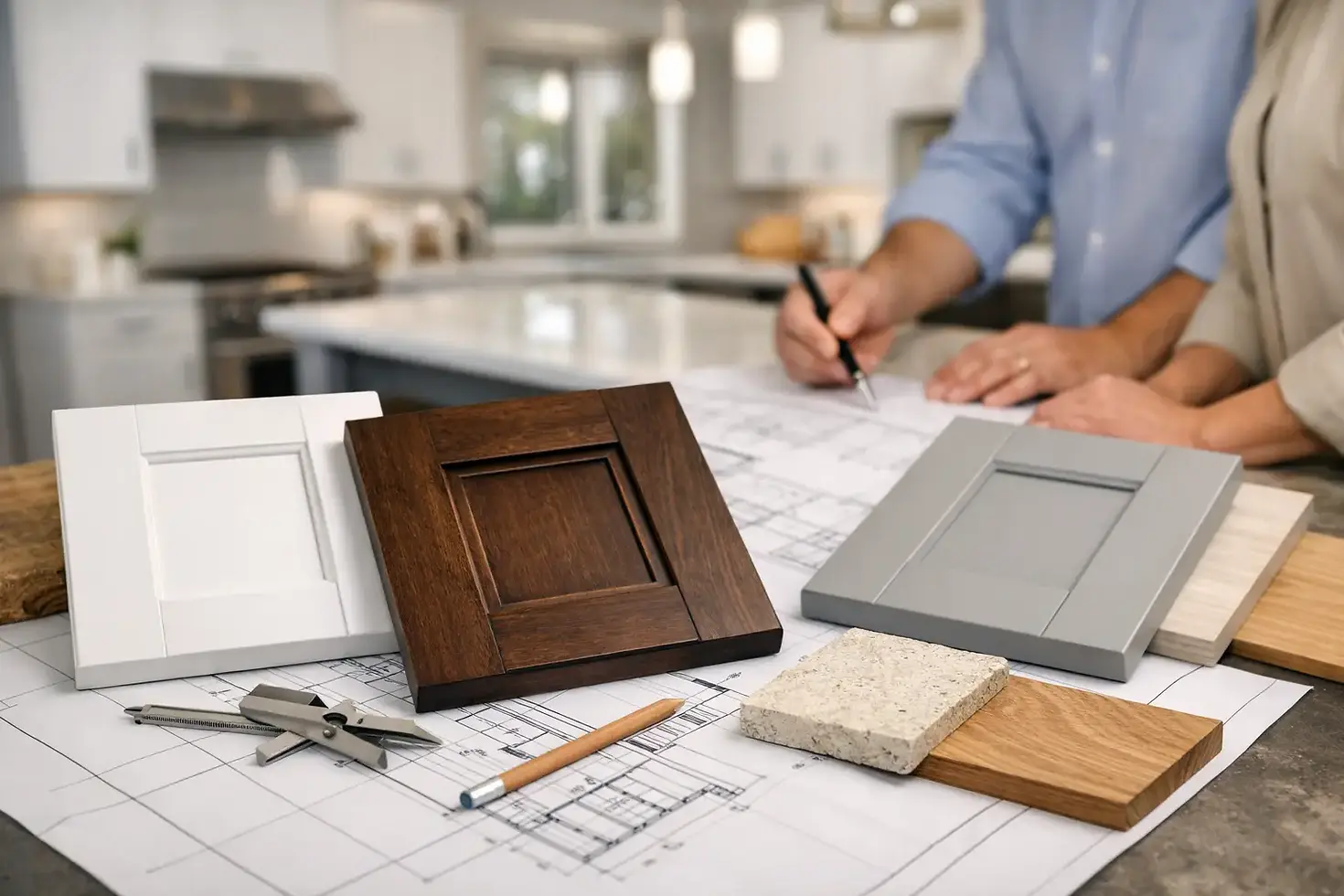
Wholesale Kitchen Cabinets That Fit the Plan

A cabinet price can look attractive on a spec sheet and become expensive the moment it fails to fit the room, arrives with limited replacement options, or requires costly field modifications. Wholesale kitchen cabinets can create meaningful value for Phoenix homeowners, builders, and property investors, but only when product selection is tied to an accurate layout, durable construction, and a realistic installation plan.
For a single kitchen renovation, a multifamily turnover, or a new-build schedule, the goal is not simply to buy cabinets at a lower unit cost. The goal is to create storage that works every day, supports the appliances and finishes selected, and holds up to years of Arizona household use. That requires more than choosing a door color from a catalog.
What Wholesale Kitchen Cabinets Actually Mean
Wholesale kitchen cabinets are typically sold through supply-focused channels, often with pricing and inventory structures designed for contractors, builders, investors, and larger renovation projects. They may include ready-to-assemble cabinets, pre-assembled cabinet lines, shaker cabinetry, contemporary slab-door styles, and selected semi-custom options.
Wholesale does not automatically mean low quality. It also does not automatically mean premium construction. The term describes the buying model more than the cabinet itself. A well-built wholesale line can offer solid-wood doors, plywood box construction, dovetail drawer boxes, soft-close hardware, and dependable finish quality. Another line may rely on thinner materials, limited sizing, and hardware that is not intended for heavy long-term use.
That distinction matters because cabinets are structural working components of the kitchen. They support countertops, carry daily loads, frame appliances, and determine how efficiently the room functions. The best value comes from matching the cabinet grade to the property, expected use, budget, and project timeline.
Start With the Floor Plan, Not the Door Style
Door style is visible, but layout decisions have the greater impact on daily performance. Before selecting wholesale cabinets, establish the room's exact dimensions, window and door locations, ceiling height, appliance specifications, utility connections, and floor conditions. A cabinet plan should also account for corner access, clear walking paths, countertop overhangs, hood placement, and island circulation.
This is where a lower initial cabinet price can be misleading. A line with limited cabinet widths may force unnecessary fillers, awkward gaps, or compromised storage. A standard base cabinet may technically fit a wall, for example, while leaving too little room for a dishwasher door to open comfortably or for a refrigerator to clear an adjacent return wall.
A tailored floor plan can often make stock or wholesale cabinetry look and perform far more like a custom installation. Strategic use of pantry cabinets, drawer bases, pullout storage, finished panels, and properly sized fillers creates a polished result without treating every component as a custom order.
Key Measurements That Protect the Investment
Accurate measurement is not a formality. It is the foundation for clean installation and maximum functionality. Confirm finished floor elevations, wall conditions, appliance cut sheets, plumbing locations, electrical requirements, and soffit or ceiling variations before finalizing the order.
In older Phoenix homes, walls may not be perfectly plumb and floors may not be level. In newer construction, the cabinet plan may need to coordinate closely with construction schedules and trade work. Both situations benefit from detailed structural planning before cabinets are delivered. It is far easier to adjust a plan on paper than to solve a clearance issue after countertop templating.
Construction Details Worth Comparing
When evaluating wholesale kitchen cabinets, look beyond the door sample. The cabinet box, drawer system, joinery, and finish process will influence how the kitchen performs years after installation.
Plywood cabinet boxes are commonly preferred for their strength and moisture resistance, particularly around sinks and dishwashers. Furniture board can be appropriate in certain applications and price points, but its thickness, edge treatment, and construction quality should be assessed carefully. Solid wood is often used for face frames and doors, while drawer boxes may be solid wood or engineered materials depending on the line.
Hardware deserves the same scrutiny. Soft-close hinges and drawer glides improve the daily experience, but the quality and weight rating of those components vary. A deep drawer filled with cookware places much greater demand on glides than a shallow drawer holding utensils. For rental properties and busy family kitchens, durable, adjustable hardware can reduce future service needs.
Also ask how replacement parts are handled. A dependable supplier should be able to identify matching doors, drawer fronts, hinges, touch-up materials, and panels when a repair or expansion is needed. Availability is especially important for phased projects, multifamily renovations, and homes where future repairs are likely.
Choosing Between RTA, Assembled, and Custom Options
Ready-to-assemble cabinets can be an effective wholesale option when budget control is a priority and the product line is engineered for proper assembly. They can reduce freight volume and offer practical choices for investment properties, secondary kitchens, laundry rooms, or cost-conscious remodels. The trade-off is labor. Assembly quality affects squareness, drawer operation, and long-term stability, so RTA cabinets need careful handling and experienced installation.
Pre-assembled cabinets reduce on-site assembly time and can support a faster installation sequence. They are often a strong choice for homeowners who want a streamlined renovation process or contractors managing several moving parts. They may cost more upfront than RTA cabinets, yet the labor savings and reduced risk of assembly errors can make the total project cost more predictable.
Custom cabinetry offers the widest flexibility for unusual dimensions, specialized storage, high ceilings, and highly specific design goals. It can be the right solution for a luxury home in Paradise Valley, a distinctive historic property, or a kitchen where every inch must be tailored. However, custom production usually requires a larger budget and longer lead time. For many projects, a well-designed wholesale cabinet plan with the right modifications delivers the better balance of cost, appearance, and durability.
Plan for the Costs Around the Cabinets
Cabinet pricing is only one part of the renovation budget. Countertops, demolition, wall repairs, electrical updates, plumbing changes, flooring transitions, hardware, delivery, assembly, and installation all affect the final number. A wholesale cabinet quote should be reviewed alongside these related costs, not in isolation.
For example, moving a sink or range may improve the layout but increase plumbing, electrical, ventilation, and permit requirements. Adding taller pantry cabinets can greatly improve storage but may require crown molding, ceiling adjustments, or more precise installation. These are not reasons to avoid better design. They are reasons to plan the full scope early.
For builders and multifamily owners, consistency is another financial consideration. Selecting a cabinet line with reliable availability, repeatable quality, and a coordinated range of vanities and accessories can simplify purchasing across multiple units. A slightly higher cabinet cost may be justified if it prevents delays, mismatched replacements, or frequent maintenance calls.
Why Installation Quality Changes the Result
Even premium cabinetry will not perform as intended if it is installed without careful leveling, proper fastening, and precise alignment. Base cabinets must be leveled before countertops are measured. Wall cabinets need secure attachment to appropriate framing. Doors and drawer fronts require adjustment so reveals are even and operation remains smooth.
Professional installation also helps protect the finish during delivery, assembly, and construction activity. Cabinets should be staged in a dry, secure area and installed in the right sequence relative to flooring, paint, appliances, and countertops. Rushing that coordination can lead to scratches, moisture exposure, or avoidable rework.
At Home Improvement Warehouse, cabinet selection is approached as part of the complete kitchen system. Detailed layout planning, premium cabinetry options, and installation coordination help homeowners and trade clients move from an initial concept to a finished space with fewer gaps between decisions.
A Smarter Way to Buy Wholesale Cabinets
The strongest wholesale cabinet purchase begins with a clear project brief: how the kitchen is used, who uses it, which appliances are staying or changing, what storage is missing today, and how long the finished space needs to perform. From there, compare construction, available sizes, lead times, finish options, and installation requirements against the actual floor plan.
Do not assume the least expensive cabinet package is the best deal, and do not assume a higher price guarantees better performance. Ask for the construction details, verify every dimension, and make sure the supplier can support the project through delivery and installation. A kitchen is easier to enjoy when its cabinets were chosen for the room they serve, not just the price they carried.


Comments